How to Select an OEM Supplier: A Complete Checklist for Wine Cooler Manufacturers
As a leading wine cooler manufacturer, Wiki Cooler understands the critical role original equipment manufacturers (OEMs) play in delivering high-quality products. Selecting the right OEM supplier is paramount to our success, impacting everything from product quality and production efficiency to our overall market competitiveness. A partnership with the wrong supplier can lead to costly delays, quality control nightmares, and damage to our brand's reputation.
This comprehensive guide provides a complete OEM supplier checklist designed specifically for wine cooler manufacturers like Wiki Cooler. We will explore the key considerations necessary to ensure you partner with a reliable appliance supplier that meets your exacting standards. Following this checklist will help us thrive in a complex manufacturing landscape and forge a partnership that drives long-term success and innovation.
Establishing Success: Crafting Your OEM Supplier Checklist for Wiki Cooler
The foundation of a successful product line is a robust and reliable manufacturing partnership. For a specialized product like a wine cooler, where precision, technology, and aesthetics converge, the choice of an OEM supplier is not just a procurement decision—it's a strategic one. This initial phase of your checklist focuses on the core competencies and communication structures that separate an average supplier from a true partner.
The Imperative of a Qualified and Communicative OEM Supplier
Before delving into production lines and pricing, it's essential to assess the human element and the foundational processes of a potential OEM partner. A supplier’s team and their communication protocols are leading indicators of how they will perform under pressure and how they will handle the complexities of bringing a new wine cooler to market.
Why an Experienced Team Matters for Every Wine Cooler Manufacturer
An OEM's greatest asset is its people. An experienced team of engineers, technicians, and project managers can be the difference between a smooth product launch and a series of frustrating setbacks. For a wine cooler manufacturer, this expertise is non-negotiable. Look for a team that demonstrates a deep understanding of refrigeration technology, including compressor systems, thermoelectric cooling, and dual-zone temperature management. Their experience translates into tangible benefits such as proactive problem-solving, innovative design suggestions, and efficient navigation of the product development lifecycle. An experienced team can foresee potential manufacturing challenges and recommend design modifications that improve reliability and reduce production costs, ensuring the final product is both high-quality and cost-effective.
Furthermore, a seasoned team has likely navigated complex material sourcing and logistical challenges before. They will have established relationships with component suppliers and a better grasp of lead times, which is critical for maintaining your production schedule. When vetting a potential OEM, ask specifically about the tenure of their key engineering and quality assurance staff.
Fostering Seamless Communication with Your Reliable Appliance Supplier
Clear, consistent, and transparent communication is the bedrock of any successful OEM partnership. Misunderstandings can lead to incorrect specifications, production errors, and significant delays. Your checklist must include a thorough evaluation of the supplier's communication framework. A reliable appliance supplier should provide a dedicated point of contact, such as an account or project manager, who is fluent in your language and understands the technical nuances of your product.
Evaluate their communication practices by asking about:
- Regularity of Updates: Do they have a standard process for weekly progress reports, including photos or videos from the production line?
- Communication Channels: What tools do they use for daily communication (e.g., email, dedicated chat platforms, video conferencing)?
- Response Time: What are their established service level agreements (SLAs) for responding to inquiries and resolving issues?
- Documentation: How do they manage and document design changes, approvals, and key decisions to ensure there is a clear record?
A supplier who is proactive in their communication and transparent about challenges is one you can trust to act as a true extension of your team.
Ensuring Compliance and Regulatory Standards with Your Chosen OEM
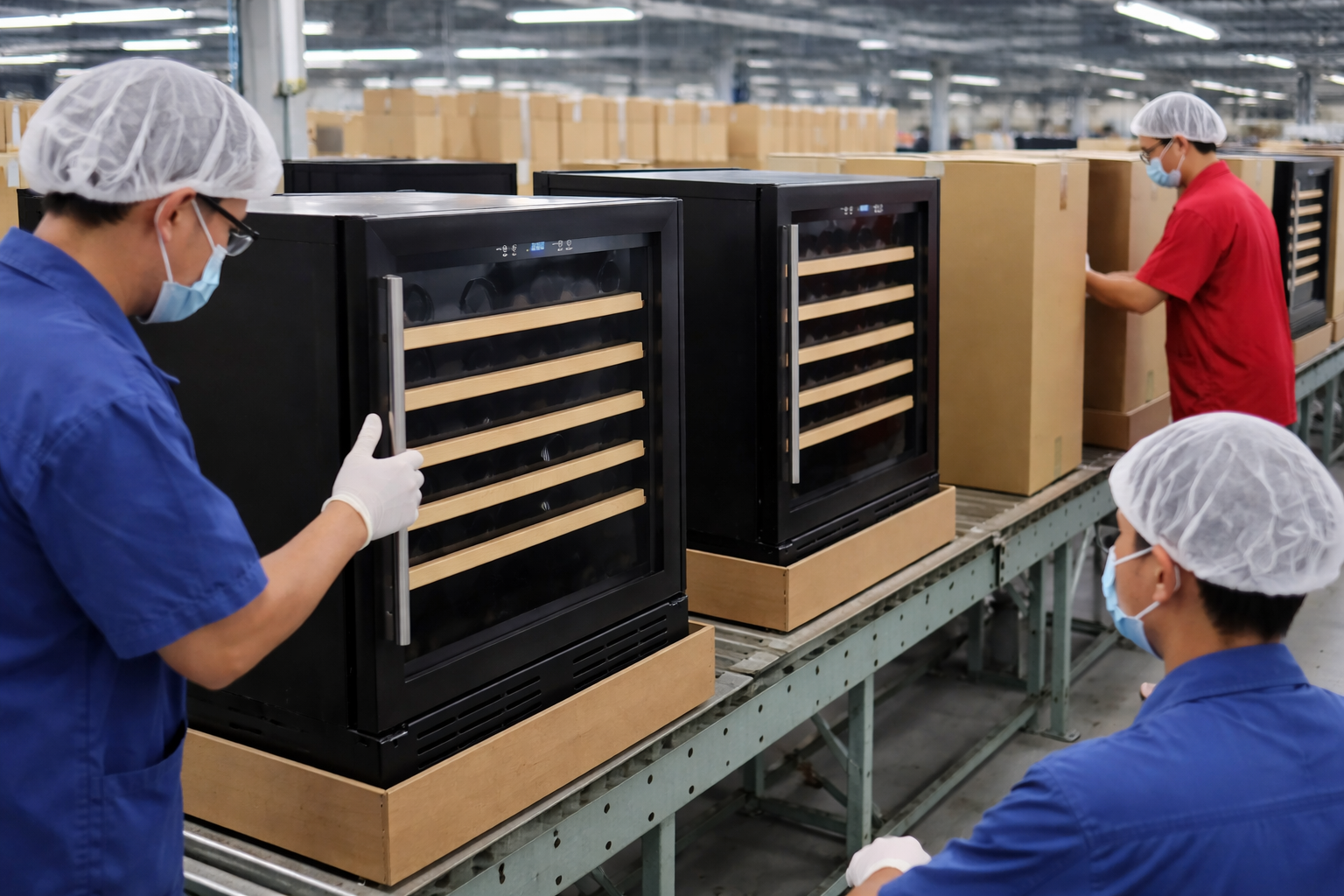
In the home appliance market, adherence to regulatory and safety standards is mandatory. A failure in compliance can result in blocked market access, forced recalls, and severe financial penalties. Your chosen OEM must demonstrate a deep and up-to-date understanding of the standards in your target markets.
For a wine cooler manufacturer selling in North America and Europe, your OEM supplier checklist should verify their experience with certifications such as:
- UL/ETL: For safety standards in the United States and Canada.
- CE Marking: For compliance with health, safety, and environmental protection standards in the European Economic Area.
- Energy Star: For energy efficiency, a key selling point for modern appliances.
- RoHS: Restriction of Hazardous Substances, which is critical for material safety and environmental responsibility.
- REACH: A European Union regulation concerning the Registration, Evaluation, Authorisation, and restriction of Chemicals.
Ask for copies of existing certifications for similar products they manufacture. A truly reliable appliance supplier will have a dedicated compliance team responsible for monitoring regulatory changes and ensuring all products meet the necessary legal requirements.
Assessing Manufacturing Capacity and Flexibility for Wiki Cooler's Needs
Once you've confirmed a supplier has the right team and processes, the next step is to evaluate their physical manufacturing capabilities. Their factory floor is where your designs become reality, and its capacity and adaptability are critical to your ability to scale and respond to market demands.
Evaluating Technical Capabilities and Production Volume for a Wine Cooler Manufacturer
A site visit or a detailed virtual tour is essential for assessing an OEM's technical capabilities. Pay close attention to the age, condition, and technological sophistication of their equipment and production lines. For wine cooler manufacturing, this includes their capabilities in metal stamping and bending, plastic injection molding, foaming for insulation, and the assembly and testing of refrigeration systems.
Your evaluation should create a clear picture of their production capacity. You need to understand their:
- Maximum Production Volume: Can they handle your peak season demand without compromising quality?
- Minimum Order Quantity (MOQ): Is their MOQ low enough to allow for initial pilot runs or niche product launches?
- Production Line Efficiency: How do they measure and optimize their output? Look for evidence of lean manufacturing principles or other efficiency methodologies.
A mismatch between your volume needs and their capacity can create significant friction. A supplier that is too large may not give your account the attention it deserves, while one that is too small may struggle to keep up with your growth.
Adaptability to Production Changes and Custom Product Requests
The wine cooler market is not static. Consumer preferences change, new technologies emerge, and you may want to introduce custom features or limited-edition models. Your OEM partner must be agile enough to adapt to these changes. Discuss hypothetical scenarios with them:
- How would they handle a mid-production design change?
- What is their process for developing and tooling a custom-sized unit?
- Can they scale production up or down in response to fluctuating sales forecasts?
A supplier with a rigid, inflexible process will stifle innovation. Look for an OEM with a dedicated R&D or New Product Introduction (NPI) team that can work collaboratively with you on custom requests. Their willingness and ability to accommodate changes is a strong indicator of their commitment to a long-term, strategic partnership rather than a simple, transactional relationship.
Strategic Considerations for Wiki Cooler's OEM Supplier Selection
Beyond foundational capabilities, a strategic OEM partner brings industry-specific expertise and a resilient operational structure. This section of the checklist focuses on verifying their track record, quality assurance systems, and supply chain integrity—factors that protect your brand and ensure consistent product delivery.
Verifying Industry Experience and a Robust Quality Assurance Process
Anyone can claim to be a quality manufacturer, but proven experience and a documented, systematic approach to quality are the true differentiators. For a premium product like a wine cooler, quality is not a feature; it is the core of the product's value.
The Value of Proven Expertise in Wine Cooler Manufacturing
General appliance manufacturing experience is good, but specific expertise in wine cooler or refrigeration manufacturing is far better. An OEM with a proven track record in this niche will already understand the unique challenges involved, such as:
- Vibration Control: Minimizing compressor vibrations to protect the wine.
- UV Protection: Sourcing and implementing specific types of glass for doors.
- Humidity Management: Designing systems that maintain optimal humidity levels.
- High-End Finishes: Working with materials like stainless steel and wood trim to achieve a premium look and feel.
Request a portfolio of wine coolers or other refrigeration products they have manufactured for other brands (under a non-disclosure agreement, if necessary). Ask for case studies or references from other clients in the appliance industry. This specific expertise ensures a shorter learning curve and a higher probability of a successful outcome from the start.
Implementing Effective Quality Control Checks for a Reliable Appliance Supplier
A robust Quality Assurance (QA) process is not just a final inspection; it's a series of checkpoints integrated throughout the entire manufacturing process. A reliable appliance supplier should be able to clearly articulate and demonstrate their quality management system.
Your checklist should include verification of the following multi-stage QC processes:
| Quality Control Stage | Purpose | Key Checks for a Wine Cooler Manufacturer |
|---|---|---|
| Incoming Quality Control (IQC) | To inspect and verify all raw materials and components before they enter production. | Verifying compressor specifications, checking glass for UV coating, testing electronic control boards. |
| In-Process Quality Control (IPQC) | To monitor processes and catch defects during manufacturing and assembly. | Checking for proper insulation foaming, ensuring door seals are airtight, monitoring soldering on control panels. |
| Final Quality Assurance (FQA/OQC) | To inspect and test the finished product before it is packaged and shipped. | Running a 24-hour temperature stability test, checking for cosmetic defects, verifying all functions work correctly. |
Ask about their AQL (Acceptable Quality Limit) standards for inspections and their process for handling non-conforming products. A supplier who is transparent about their quality metrics and has a clear corrective action plan is one you can trust to protect your brand's reputation for quality.
The Critical Role of a Reliable Supply Chain within Your OEM Supplier Checklist
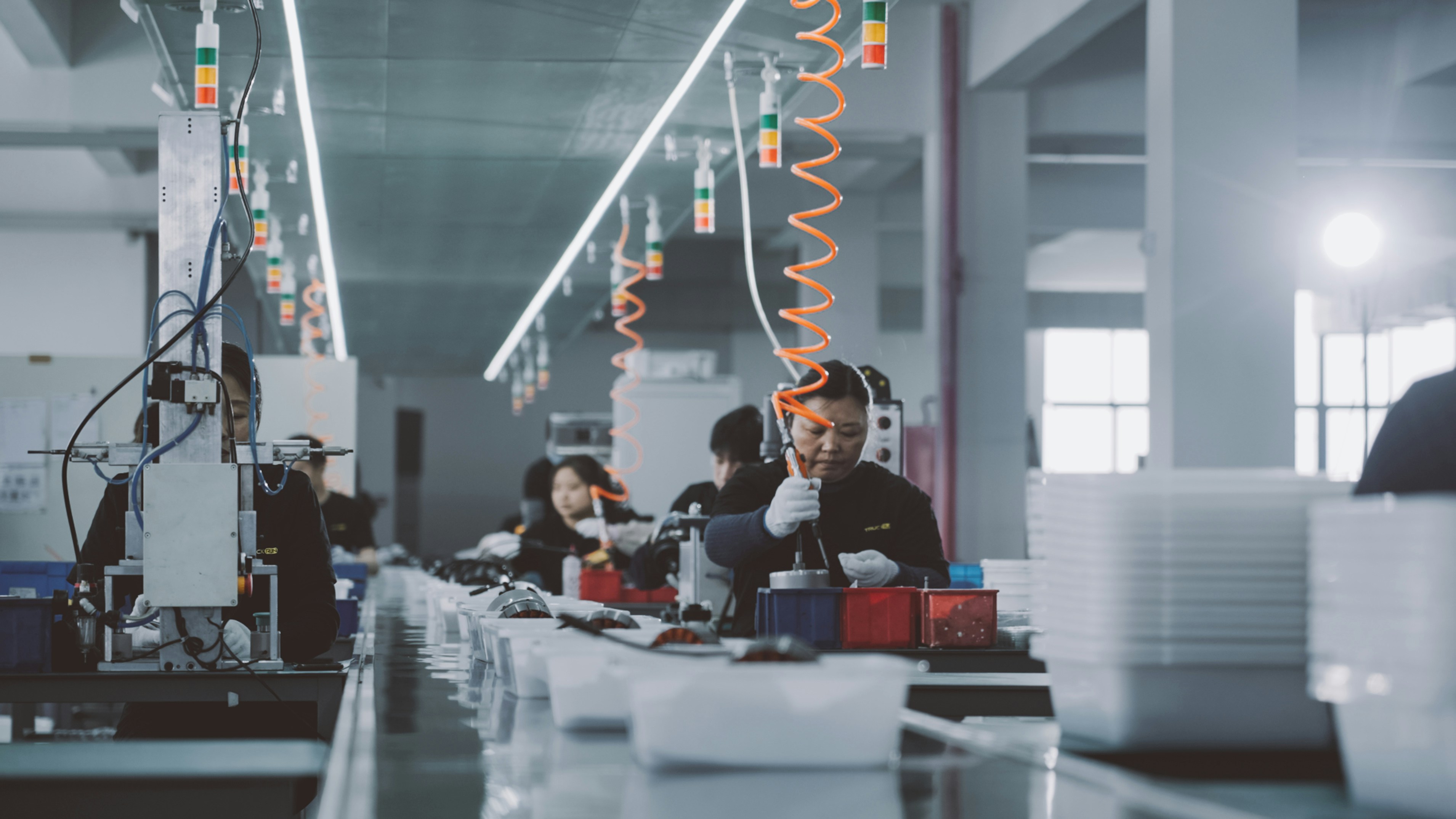
Your OEM supplier is only as strong as its own supply chain. A disruption in their supply of a critical component, like a compressor or a control board, will directly halt your production. Therefore, vetting their supply chain management is just as important as vetting their factory.
Ensuring Uninterrupted Production for Wiki Cooler
A resilient supply chain is one that can withstand unexpected disruptions. Your OEM partner should not be single-sourced for critical components. Discuss their supply chain strategy with them and ask about:
- Supplier Diversification: Do they have qualified backup suppliers for essential parts? What is their process for onboarding and qualifying a new component supplier?
- Inventory Management: What is their strategy for raw material and component inventory? Do they hold a safety stock of critical items to buffer against potential delays?
- Supply Chain Visibility: Do they have systems in place to monitor their suppliers' performance and anticipate potential shortages or quality issues?
A proactive approach to supply chain risk management is a sign of a mature and reliable manufacturing partner who can provide the stability needed for uninterrupted production.
Proactive Supplier Vetting and Site Visits
There is no substitute for seeing an OEM’s operations with your own eyes. A factory audit or site visit is one of the most critical steps in your vetting process. If an in-person visit isn't feasible, a comprehensive live-streamed virtual tour can be a valuable alternative.
During the visit, move beyond the conference room and observe the reality of their operations. Pay attention to:
- Cleanliness and Organization: A clean and well-organized factory (look for 5S or similar methodologies) is often indicative of a well-run, quality-focused operation.
- Equipment Maintenance: Is the machinery well-maintained, or does it show signs of neglect? Ask to see their maintenance logs.
- Worker Skill and Morale: Are workers properly trained and equipped? Do they seem engaged and motivated?
- Traceability: Can they demonstrate how they trace a component from receiving through to the final product? This is vital for quality control and potential recalls.
A supplier who welcomes a thorough audit and is transparent about their operations is likely confident in their capabilities and has nothing to hide.
Optimizing Cost-Effectiveness and Long-Term Value with Your OEM Supplier
While cost is an undeniable factor in selecting an OEM supplier, the lowest price on a quote sheet rarely reflects the true cost of a partnership. A strategic approach focuses on Total Cost of Ownership (TCO) and the long-term, intangible value a great partner provides. For a wine cooler manufacturer, balancing upfront costs with long-term reliability and innovation is key to sustained profitability.
Beyond Price: Evaluating the True Cost of Partnership for a Wine Cooler Manufacturer
A cheap supplier can quickly become expensive if they deliver poor quality, miss deadlines, or have hidden fees. To make a financially sound decision, you must look beyond the per-unit price and analyze the complete financial picture of the partnership.
Seeking Competitive Pricing Without Hidden Costs
When you receive a quote, it's crucial to understand exactly what is included and, more importantly, what is not. A common pitfall is overlooking costs that are not explicitly listed in the initial price. The concept of Total Cost of Ownership (TCO) helps to provide a more accurate financial comparison between potential suppliers.
Your TCO analysis should include:
| Cost Category | Description | Questions to Ask a Potential OEM |
|---|---|---|
| Unit Price | The price per wine cooler unit at a specified volume. | Are there price breaks at higher volumes? How long is this price valid? |
| Tooling & NRE | The one-time costs for molds, dies, and fixtures (Non-Recurring Engineering). | Are these costs amortized or a one-time payment? Who owns the tooling? |
| Shipping & Logistics | The cost to transport goods from the factory to your warehouse, including freight, insurance, and tariffs. | What are the Incoterms (e.g., FOB, EXW)? Can they provide estimated shipping costs? |
| Quality Costs | The "cost of poor quality," including returns, reworks, warranty claims, and customer dissatisfaction. | What are their historical defect rates? How do they handle warranty claims? |
| Overhead & Management | The internal time and resources your team spends managing the supplier relationship. | How much project management support is included? Will communication be a challenge? |
By creating a TCO model, you may find that a supplier with a slightly higher unit price is actually more cost-effective in the long run due to lower tooling costs, better quality, or more favorable shipping terms.
Understanding Long-Term Value from a Reliable Appliance Supplier
The most valuable OEM relationships evolve into strategic partnerships that provide benefits far beyond manufacturing. A reliable appliance supplier invests in your success and contributes to your growth. This long-term value is often found in the "soft" benefits that don't appear on a quote.
Look for a partner that offers:
- Collaborative Innovation: Do they proactively suggest new materials, technologies, or design improvements that could enhance your wine coolers or reduce costs?
- Process Optimization: A great partner will look for ways to make the manufacturing process more efficient over time, sharing the cost savings with you.
- Market Intelligence: Due to their work with other clients and suppliers, they may have insights into new market trends or component technologies that you can leverage.
- Stability and Reduced Risk: A long-term, trusted partnership eliminates the significant cost, time, and risk associated with constantly searching for and qualifying new suppliers.
The ultimate goal is to find a supplier whose success is intertwined with yours—a partner who is committed to helping you build the best wine coolers on the market for years to come.
By diligently applying this comprehensive OEM supplier checklist, a wine cooler manufacturer like Wiki Cooler can forge strong, strategic partnerships with reliable appliance suppliers. Our commitment to a thorough evaluation process ensures we select OEMs that not only meet our immediate production needs but also contribute to our long-term growth and success as a premier brand in the market. This methodical approach transforms a simple sourcing task into a powerful strategic advantage.
Making an informed decision about your OEM supplier is a direct investment in your company's future. For Wiki Cooler, this means consistently delivering innovative and high-quality wine coolers to our valued customers, reinforcing our position as a market leader. A strong partnership is the engine that powers brand reputation and customer loyalty, ensuring a prosperous future built on a foundation of quality and trust.