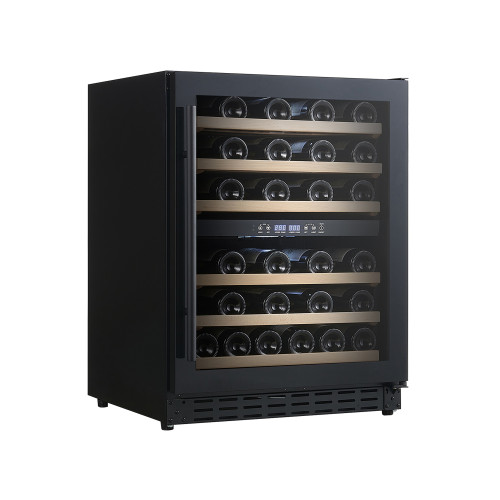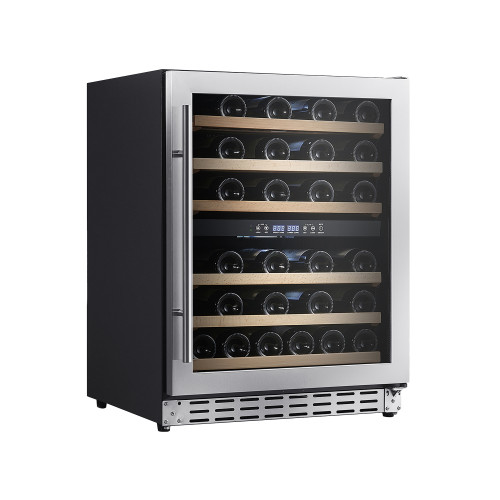
Everything a Built-in Wine Cooler Manufacturer Needs to Know About OEM Partnerships
As a built-in wine cooler manufacturer, navigating the complexities of the market and ensuring your brand stands out requires strategic decisions. One such decision, crucial for growth and innovation, is forming robust OEM partnerships. I'll guide you through everything you need to know about forging successful OEM collaborations, from initial requirements to long-term benefits. This guide is designed to empower built-in wine cooler manufacturers to make informed choices that elevate product quality, streamline production, and gain a competitive edge.
Key Takeaways
For a built-in wine cooler manufacturer, leveraging an Original Equipment Manufacturer (OEM) partnership is a strategic move that can significantly accelerate growth and enhance market competitiveness. This collaboration allows your brand to focus on its core strengths—marketing, branding, and customer relationships—while entrusting the complex manufacturing process to a specialized partner. The primary advantage lies in gaining immediate access to advanced manufacturing technologies, engineering expertise, and established supply chains without the prohibitive capital investment required to build and operate your own production facilities. This model provides substantial cost efficiencies through the OEM's economies of scale and offers the flexibility to scale production volumes up or down in response to market demand.
To ensure a successful partnership, the manufacturer must provide the OEM with a highly detailed and comprehensive brief. This begins with precise product specifications, including the number of temperature zones (single, dual, or multi-zone), bottle capacity based on standard Bordeaux-sized bottles, and a full suite of desired features like UV-protected glass, vibration-dampening systems, humidity control, and smart-enabled functionalities. Equally important are the structural and aesthetic details. This includes specifying materials such as stainless steel or panel-ready finishes, the type of door and handle design, and the interior layout, from shelving materials like beechwood to the configuration that accommodates various bottle shapes. Branding guidelines must also be explicit, covering everything from logo placement and control panel design to user manuals and packaging.
Choosing the right OEM partner is arguably the most critical step in this process. Diligent vetting is essential. You must evaluate a potential partner's industry experience, specifically their track record in producing high-quality refrigeration appliances. Request case studies, client testimonials, and information on their quality assurance protocols, such as ISO 9001 certification and their component sourcing standards. Beyond technical capabilities, a successful partnership hinges on transparent commercial terms and robust communication. Clarify Minimum Order Quantities (MOQs), production lead times, and pricing structures from the outset. Understand the logistics, including shipping terms (Incoterms), to manage costs and timelines effectively. Ultimately, the goal is to build a long-term, collaborative relationship founded on trust, clear communication, and shared objectives, transforming the OEM from a simple supplier into a strategic partner in your brand's journey.
Understanding the Foundation: What an OEM Partnership Means for a Built-in Wine Cooler Manufacturer
Forging a relationship with an Original Equipment Manufacturer (OEM) can be a transformative step for your brand. It's a strategic alliance that goes beyond simple outsourcing, allowing you to leverage specialized manufacturing capabilities to bring your unique product vision to life. Understanding the nuances of this model is the first step toward unlocking its profound benefits.
Defining OEM in the Built-in Wine Cooler Industry
In the context of the appliance industry, an OEM partnership is a collaboration where one company, the OEM, manufactures products or components that are then sold under another company's brand name. For a built-in wine cooler brand, this means you design and specify the product—dictating its features, aesthetics, and quality standards—while the OEM partner handles the entire manufacturing process, from sourcing raw materials to assembly and final testing. The end consumer sees your brand on the wine cooler, associating the quality and performance with your name. This is distinct from an Original Design Manufacturer (ODM) relationship, where the partner designs and manufactures the product, and your company simply rebrands an existing model from their catalog. The OEM model gives you, the manufacturer, complete control over the product's DNA while outsourcing the physical production.
The Strategic Advantages for a Built-in Wine Cooler Manufacturer
Engaging with an OEM is not just about offloading production; it's a strategic decision that offers significant competitive advantages in the market.
Access to Innovation and Expertise
Top-tier OEM partners are specialists in their field. They often have dedicated research and development teams focused on advancing refrigeration technology. By partnering with them, you gain access to cutting-edge innovations such as advanced thermoelectric or compressor cooling systems, ultra-quiet operation technology, and sophisticated humidity control mechanisms that you might not have the resources to develop in-house. This allows your brand to offer technologically superior products without bearing the full cost and risk of R&D. The OEM's specialized engineers and technicians bring years of experience, ensuring that your theoretical designs are translated into reliable, high-performance appliances.
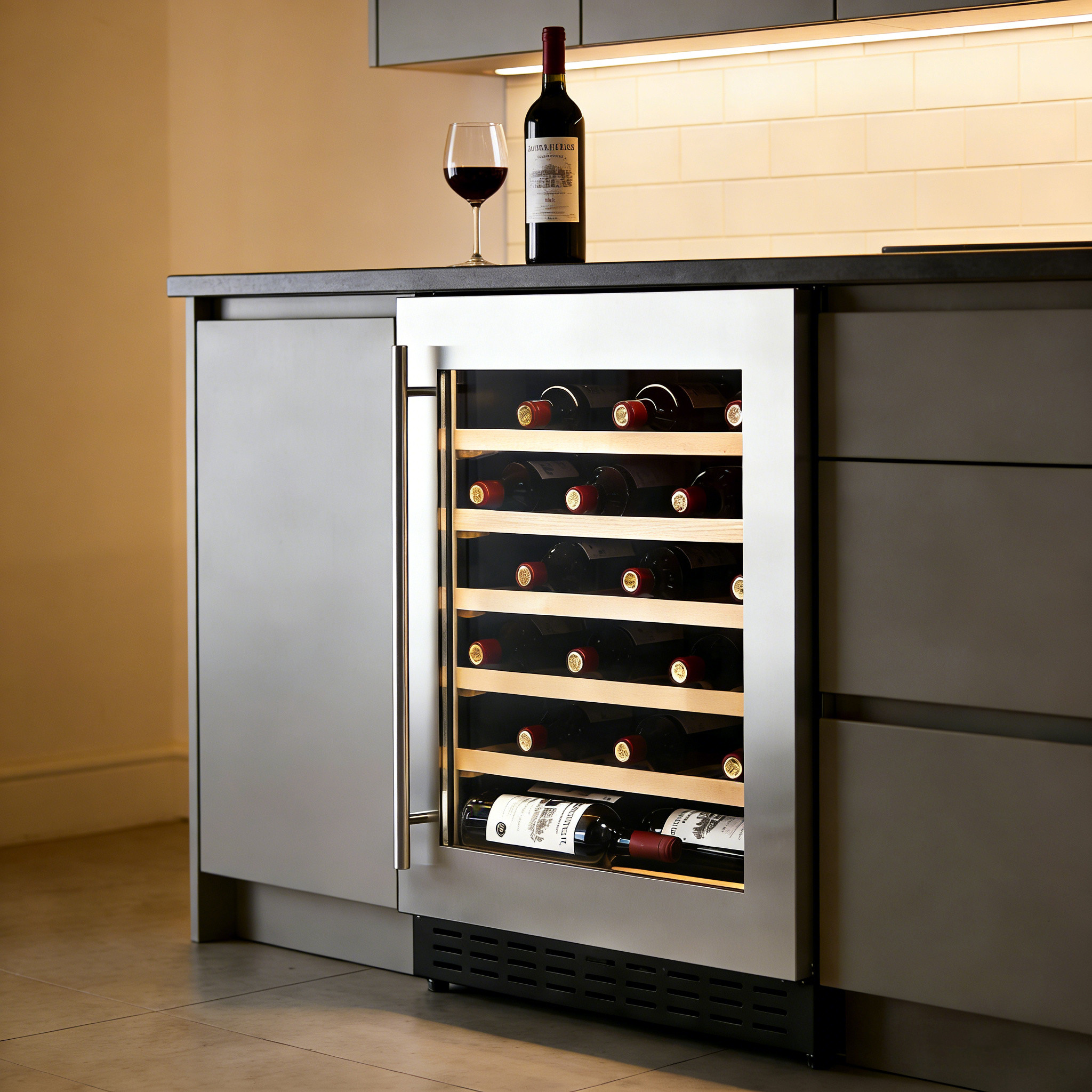
Cost Efficiency and Scalable Production
One of the most compelling benefits of an OEM partnership is the economic advantage. Building, equipping, and staffing a manufacturing plant requires immense capital investment. By partnering with an OEM, you bypass these costs and instead leverage their existing infrastructure. Furthermore, OEMs serve multiple clients, allowing them to purchase raw materials in bulk and operate their production lines at a high capacity, achieving economies of scale that result in a lower per-unit cost for your products. This model also provides unmatched scalability. Whether you need to produce a small initial batch or rapidly scale up to meet a surge in market demand, an experienced OEM can adjust production schedules accordingly, giving your business the agility to grow without being constrained by your own production capacity.
Key Information a Built-in Wine Cooler Manufacturer Needs to Provide to an OEM Partner
A successful OEM partnership is built on a foundation of clear, detailed, and unambiguous communication. The quality of the information you provide to your OEM partner directly impacts their ability to execute your vision. To create a market-leading built-in wine cooler, you must deliver a comprehensive brief covering product specifications, structural design, and brand requirements.
Product Specifications Tailored for Your Built-in Wine Cooler Manufacturer Brand
This is the core blueprint of your product. Vague specifications lead to production errors, delays, and a final product that doesn't meet your brand's standards.
Temperature Zones and Capacity Requirements
The defining feature of any wine cooler is its ability to store wine at the optimal temperature. You must clearly define:
- Temperature Zones: Specify whether the unit should be single-zone (one temperature throughout, ideal for long-term aging of a single wine type), dual-zone (two independently controlled sections for storing different varietals, like reds and whites, at their respective ideal temperatures), or even multi-zone. For each zone, provide the precise temperature range required (e.g., 40-55°F for the white wine zone, 55-65°F for the red wine zone).
- Capacity: State the desired bottle capacity. This is typically measured in standard 750ml Bordeaux-style bottles. It's crucial to also mention if the cooler needs to accommodate larger or irregularly shaped bottles, such as those for Burgundy or Champagne, as this will impact the shelving design and overall internal dimensions.
Essential Features and Functionality
To differentiate your product in a competitive market, you must specify the exact features and technologies you want to include. Consider the following:
- Cooling System: Will it use a compressor-based system, known for its power and ability to reach lower temperatures, or a thermoelectric system, valued for its vibration-free and quiet operation?
- Vibration and UV Protection: Specify the need for a vibration-dampening system to protect wine from sediment disruption. The door should be made of UV-resistant, tempered glass to shield the wine from harmful light.
- Humidity Control: A premium wine cooler maintains optimal humidity (typically 50-70%) to keep corks from drying out. Specify if an active humidity control system or a passive design is required.
- Controls and Display: Detail the type of control panel (e.g., digital touch controls, physical buttons) and the display (LED, LCD).
- Smart Features: In today's market, Wi-Fi connectivity, integration with smart home systems (like Amazon Alexa or Google Assistant), and a companion app for remote temperature monitoring and inventory management can be key selling points.
| Feature Category | Specification Examples |
|---|---|
| Cooling | Dual-Zone Compressor System, Upper Zone: 40-55°F, Lower Zone: 55-65°F |
| Capacity | 150 Bordeaux-style bottles; flexible shelving for 20 Champagne bottles |
| Protection | Vibration-dampening gasket, Triple-paned, UV-coated argon gas-filled glass door |
| Interior | Humidity control system (active), White LED lighting with dimmer, Carbon filter |
| Interface | Capacitive touch controls, External digital display, Door-ajar alarm |
| Connectivity | Wi-Fi enabled, Proprietary app for iOS/Android, Smart home integration |
Structural Design and Material Choices for a Built-in Wine Cooler
The look, feel, and durability of your wine cooler are defined by its physical construction. Your OEM needs precise instructions on materials and design to match your brand's aesthetic and quality standards.
Material Selection and Door Types
The exterior finish is critical for market appeal. You must specify:
- Body and Frame: Will the unit be constructed from commercial-grade stainless steel (e.g., 304 stainless steel for corrosion resistance), or will it be a panel-ready design that allows for the application of custom cabinetry to match the kitchen seamlessly?
- Door Design: Define whether the door should be reversible (left or right-hand opening). Specify the handle style—a sleek pole handle, a pro-style handle, or no handle for a push-to-open mechanism. The frame aroud the glass can be a key design element, choose between a seamless stainless frame or a borderless glass look.
Shelving and Interior Configuration
The interior layout affects both functionality and perceived quality. Provide details on:
- Shelving Material: Beechwood is a popular choice as it is sturdy, attractive, and doesn't impart odors. Other options include metal shelves with wooden fronts.
- Shelving Design: Specify if the shelves should be roller-glide shelves for easy access or fixed shelves. The design must be robust enough to hold the weight of the bottles and spaced appropriately. Include any plans for special display shelves that present bottles at an angle.
- Interior Finish: The interior liner material and color should also be defined (e.g., black or charcoal).
Branding, Certification, and Compliance for Your Built-in Wine Cooler Line
Beyond the physical product, you must provide clear guidelines on how it will represent your brand and meet legal requirements in your target markets.
Brand Integration and Aesthetic Considerations
Your OEM partner needs to understand how to apply your brand identity to the product. Your branding kit should include:
- Logo: High-resolution files for your logo and specific instructions on its placement (e.g., etched on the glass, a badge on the door), size, and color.
- User Interface (UI): If the cooler has a digital display, provide mockups of the UI, including fonts, icons, and color schemes.
- Packaging and Manuals: Design specifications for the shipping box, user manual, and any marketing inserts. The unboxing experience is part of your brand's promise.
Navigating Certifications and Regulatory Requirements
You are ultimately responsible for ensuring your product is compliant with all regulations in the market where it will be sold. You must instruct your OEM on which certifications to obtain. For the U.S. market, this typically includes:
- Safety Certifications: UL or ETL listing is mandatory to certify that the product meets North American safety standards.
- Energy Efficiency: Compliance with Department of Energy (DOE) standards is required. Achieving an ENERGY STAR rating can be a significant marketing advantage, indicating superior energy efficiency.
- Material Compliance: Depending on the region, you may need to ensure a-- dherence to standards like RoHS (Restriction of Hazardous Substances).
Your OEM partner can often manage the process of testing and certification, but you must specify which standards are required and who will bear the associated costs.
Choosing the Right OEM Partner for Your Built-in Wine Cooler Manufacturer Business
Selecting the right OEM partner is a decision that will profoundly impact your business's trajectory, product quality, and brand reputation. It's a process that demands due diligence, a critical evaluation of technical capabilities, and an assessment of cultural fit. A partnership in manufacturing is like any long-term relationship; it must be built on trust, transparency, and shared goals. As established built-in wine cooler manufacturers, we understand that this choice is paramount.
Evaluating an OEM's Track Record and Quality Control
A potential partner's past performance is the best indicator of their future reliability. You need to dig deep into their history and their internal processes for ensuring quality.
Experience and Industry Specialization in Built-in Wine Coolers
Not all OEMs are created equal. Look for a partner with proven, specific experience in the refrigeration and appliance industry.
- Specialization: Do they specialize in cooling technology? Have they manufactured wine coolers or similar appliances before? A generalist manufacturer may not understand the specific nuances of wine preservation, such as the importance of vibration control or precise humidity management.
- Portfolio and References: Ask to see their portfolio of past projects. request client references and case studies. Speaking with their current or former partners can provide invaluable, real-world insights into their reliability, communication style, and problem-solving abilities.
- Company Stability: Investigate the financial health and stability of the company. A partner with a long, stable history is less likely to face disruptions that could impact your production.
Quality Assurance and Testing Protocols
A commitment to quality must be embedded in the OEM's culture and processes. Don't just take their word for it; ask for documentation and evidence.
- Certifications: Check for internationally recognized quality management certifications, most notably ISO 9001, which indicates a commitment to consistent processes and continuous improvement.
- Quality Control (QC) Process: Ask for a detailed breakdown of their QC process. This should cover incoming material inspection, in-process checks at various stages of assembly, and, most importantly, final product testing. What tests do they perform? Do they check temperature accuracy, cooling speed, energy consumption, and noise levels for every unit?
- Traceability: A good OEM will have a system for tracing components back to their source, which is crucial for managing any potential quality issues or recalls down the line.
Logistics and Commercial Terms for a Built-in Wine Cooler Manufacturer
The commercial and logistical framework of your agreement is just as important as the technical specifications. These terms will directly affect your cash flow, inventory management, and profitability.
Minimum Order Quantities (MOQ) and Lead Times
These two figures are fundamental to your business planning.
- MOQ: The Minimum Order Quantity is the smallest number of units the OEM is willing to produce in a single production run. A high MOQ can be challenging for a new brand or product launch, as it ties up capital in inventory. Negotiate an MOQ that aligns with your sales forecasts and risk tolerance.
- Lead Time: This is the time from when you place an order to when the finished goods are ready to ship. It includes time for sourcing materials, production, and QC. You need a clear and reliable lead time to manage your supply chain, plan marketing campaigns, and keep your retailers stocked.
Pricing Structures and Shipping Logistics
Understanding every cost component is essential for protecting your margins.
- Pricing: The pricing model should be transparent. Is it a fixed price per unit? Does it follow a cost-plus model? Be sure to clarify what is included—are tooling and mold costs separate? Are certification fees extra? A detailed, itemized quote is non-negotiable.
- Shipping Terms (Incoterms): Clarify the shipping terms using standardized Incoterms. For example, is the price quoted as FOB (Free On Board), meaning the OEM is responsible for getting the goods to the port of departure, or EXW (Ex Works), where you are responsible for picking up the goods from their factory? This has a significant impact on your total landed cost.
The Importance of Clear Communication and Long-Term Collaboration
Beyond the contracts and technical sheets, the human element is key. A successful OEM relationship is a long-term collaboration, not a one-off transaction.
- Communication Channels: Establish clear and regular communication channels from the beginning. Who are your primary points of contact? How often will you have progress meetings? Using shared project management tools can help keep everyone aligned.
- Cultural Fit and Transparency: Does the potential partner share your values regarding quality and business ethics? Are they transparent when problems arise? You need a partner who will proactively communicate challenges and work with you to find solutions, rather than hiding issues.
- Shared Vision: The ideal OEM partner is one who is invested in your success. They should act as a strategic advisor, offering suggestions for improvement based on their manufacturing expertise. When your brand grows, their business grows too. Fostering this sense of shared destiny is the hallmark of a truly great OEM partnership.
Frequently Asked Questions (FAQ)
What is the difference between an OEM and an ODM partnership in the built-in wine cooler industry?
The key difference between an Original Equipment Manufacturer (OEM) and an Original Design Manufacturer (ODM) lies in who is responsible for the product's design and intellectual property. In an OEM partnership, you, the brand, are responsible for the research, design, and detailed specifications of the built-in wine cooler. You provide a complete technical blueprint to the OEM partner, whose primary role is to manufacture the product according to your exact instructions. You retain ownership of the design and intellectual property. This model offers maximum control over the product's features, quality, and aesthetics, allowing for significant brand differentiation.
In contrast, an ODM partnership involves selecting a pre-existing product from the manufacturer's catalog and rebranding it as your own. The ODM is responsible for the design, engineering, and manufacturing. Your brand may be able to request minor cosmetic changes, such as color, branding, or packaging, but the core product is not your design. The ODM model offers a faster time-to-market and lower R&D costs, but it provides very little differentiation from competitors who may be sourcing the exact same product from the same ODM. For a brand focused on creating a unique, high-quality built-in wine cooler, the OEM path is superior.
Who owns the intellectual property (IP) in an OEM relationship?
In a standard OEM agreement, the intellectual property (IP) for the product's design, including its unique features, aesthetic elements, and engineering specifications, is owned by the brand that commissioned the manufacturing—that is, your company. You are providing the blueprint; the OEM is providing the manufacturing service. It is absolutely critical that this is explicitly defined and protected in a legally binding contract before any proprietary information is shared. The contract should clearly state that all design patents, trademarks, and any other IP associated with the product you've designed are your sole property.
The contract should also include strong confidentiality and non-disclosure clauses to prevent the OEM from using your designs to create products for other clients or for their own brand. However, it's important to note that the OEM may own the IP related to their specific manufacturing processes or any pre-existing proprietary technology they incorporate into your product at your request. These terms must be negotiated carefully to ensure your core IP is secure.
How can a built-in wine cooler manufacturer protect their brand's reputation when using an OEM?
Protecting your brand's reputation is paramount when outsourcing manufacturing. Your customers will associate the final product's quality directly with your name. The primary method of protection is through rigorous quality control and auditing. This starts with choosing a reputable OEM with a proven track record. Before signing a contract, you should conduct a thorough factory audit to inspect their facilities, processes, and quality management systems (like ISO 9001 certification).
Your OEM agreement must include a detailed Quality Assurance (QA) section that specifies component standards, in-process testing protocols, and final product inspection criteria. You have the right to, and should, have your own QA team or a third-party inspection agency conduct periodic checks at the factory. This includes inspecting raw materials, monitoring the assembly line, and performing random sample testing on finished products before they are shipped. Building a strong, transparent relationship with the OEM, where quality is a shared goal, is the ultimate safeguard for your brand's reputation.
What are the typical payment terms in an OEM agreement for appliances?
Payment terms in an OEM agreement can vary but typically follow a milestone-based structure designed to mitigate risk for both the brand and the manufacturer. A common arrangement is a partial payment upfront, with subsequent payments tied to specific stages of the production process. A typical structure might look like this:
- Down Payment: 30-50% of the total order value paid upfront when the purchase order is placed. This allows the OEM to procure the necessary raw materials and components for your production run.
- Pre-Shipment Payment: The remaining 50-70% is paid after the goods have been produced and have passed the final quality inspection, but before they are released for shipping. The brand often receives a copy of the inspection report and the Bill of Lading (as proof of shipment) at this stage.
For long-term partners with a strong history of trust, more flexible terms might be negotiated, such as a smaller down payment or payment upon receipt of the goods. However, for new relationships, the 30/70 or 50/50 split is a common and fair standard that balances the financial risk between both parties.
Conclusion
By providing clear and comprehensive information, a built-in wine cooler manufacturer can foster a strong and productive OEM partnership. This proactive approach, covering everything from detailed technical specifications and material choices to stringent quality control and transparent commercial terms, ensures that your vision for a high-quality, market-ready built-in wine cooler is realized efficiently and effectively. A partnership built on this foundation of clarity and trust allows you to leverage external expertise, reduce capital expenditure, and scale your business with agility.
This strategic collaboration is more than just outsourcing; it's about building a symbiotic relationship where your brand's market insights and design vision are united with a partner's manufacturing prowess. Taking these steps will not only lead to a superior product but will also fortify your brand's position in a competitive marketplace. For built-in wine cooler manufacturers seeking a reliable and experienced OEM partner with a commitment to quality and expertise in custom refrigeration solutions, we invite you to explore a partnership. If you have any further questions or wish to discuss your project in detail, please do not hesitate to Contact Wiki.